Korean Beef Bibimbap Bowl Recipe
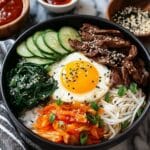
A vibrant and flavorful Korean Beef Bibimbap Bowl featuring seasoned ground beef, sautéed vegetables, and a sunny-side-up egg served over warm short-grain rice, drizzled with spicy gochujang sauce. This dish balances savory, spicy, and fresh elements for a classic Korean comfort meal.
- Prep Time: 15 minutes
- Cook Time: 20 minutes
- Total Time: 35 minutes
- Yield: 4 servings 1x
- Category: Main Course
- Method: Stovetop
- Cuisine: Korean
Ingredients
Scale
Meat and Protein
- 1 lb lean ground beef
- 4 eggs
Grains
- 2 cups short-grain white rice (cooked)
Vegetables
- 1 cup carrots (julienned)
- 1 cup spinach (fresh)
- 1 cup zucchini (sliced)
- 1 cup bean sprouts
Sauces and Oils
- 3 tbsp gochujang sauce (adjust for spice level)
- 1 tbsp sesame oil
- 2 tbsp low-sodium soy sauce
Instructions
- Cook the rice: Prepare the short-grain white rice according to the package instructions; once cooked, set it aside and keep warm.
- Brown the beef: Heat a skillet over medium-high heat and cook the lean ground beef for 5 to 7 minutes until browned and fully cooked, stirring occasionally. Drain any excess fat.
- Season the beef: Stir in the gochujang sauce, low-sodium soy sauce, and sesame oil into the cooked beef. Reduce heat to low and let the mixture simmer gently for 5 minutes, allowing the flavors to meld.
- Sauté the vegetables: In a separate pan, heat a small amount of sesame oil over medium heat. Add the julienned carrots, fresh spinach, sliced zucchini, and bean sprouts. Cook for about 7 minutes until the vegetables are tender yet still crisp.
- Fry the eggs: In a clean nonstick skillet over medium heat, fry the eggs sunny-side up until the egg whites are fully set but the yolks remain runny, approximately 3 minutes.
- Assemble the bibimbap bowls: Divide the cooked rice among serving bowls. Top each with the seasoned ground beef, sautéed vegetables, and one fried egg. Drizzle additional gochujang sauce on top if desired for extra spice.
Notes
- Adjust gochujang sauce amount according to your preferred spice level.
- Use low-sodium soy sauce to keep sodium levels moderate.
- For a vegetarian version, substitute ground beef with tofu or mushrooms.
- Short-grain rice is ideal for bibimbap because of its sticky texture.
- Cook the vegetables separately to maintain their distinct textures and flavors.
- Eating bibimbap traditionally involves mixing all components together thoroughly before eating.
Keywords: Korean beef bibimbap bowl, ground beef bibimbap, spicy Korean rice bowl, gochujang recipe, healthy Korean dinner
Find it online: https://amayaharis.com/korean-beef-bibimbap-bowl-recipe/